How to Describe the Behavior of a Graph
The end behavior of the graph is represented by. The end behavior of a function f describes the behavior of the graph of the function at the ends of the x-axis.

Determining End Behavior By Openstax Page 4 13 Jobilize Com Polynomial Functions Polynomials Precalculus
Graph Description section describes the information to be included on the graph an includes.
. Describing graphs the basics. Quadratic functions have graphs called parabolas. This lesson begins labelling the key features of a graph and naming different graph chart types.
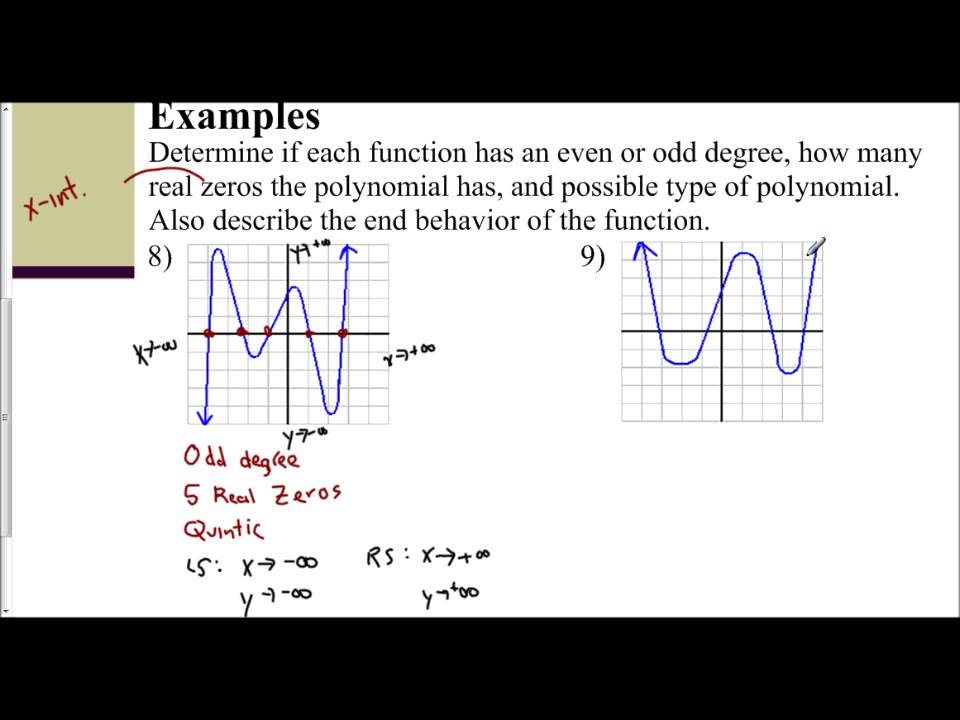
In this video we learn the Algebra 2 way of describing those little arrows yo. The end behavior of the graph tells us this is the graph of an even-degree polynomial. Two target behaviors can be listed on a single graph.
The first graph of y x2 has both ends of the graph pointing upward. Compare this behavior to that of the second graph fx. Describing behavior on each side of a vertical asymptote.
Describing Graphs Lesson Plan 1. Find the average rate of change of a function. The exponent says that this is a degree- 4 polynomial.
If either limit holds we call the line y L. Use a graph to locate local maxima and local minima. So the end behavior of a function describes the trend of the graph if we look to the right end of the x-axis as x approaches and to the left end of the x-axis as x approaches.
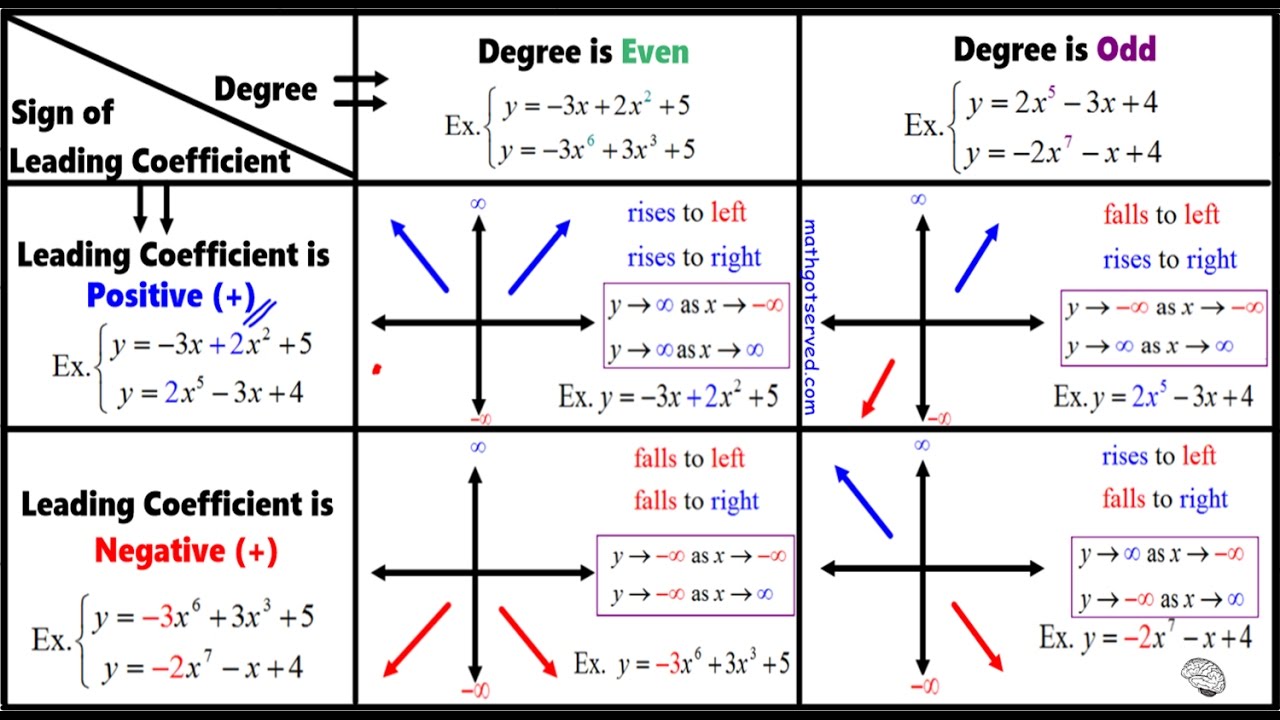
In other words the end behavior of a function describes the trend of the graph if we look to the right end of the x-axis as x approaches and to the left end of the x-axis as x approaches. Based on this it would be reasonable to conclude that. 4 is even so the graph will behave roughly like a quadratic.
The end behavior of a function f describes the behavior of the graph of the function at the ends of the x-axis. End behavior describes where a function is going at the extremes of the x-axis. Fx as x- and fx- as x.
The target behaviors displayed on the graph are identified on the legend. 24 Rates of Change and Behavior of Graphs Learning Objectives. The end behavior of a function is a way of classifying what happens when x gets close to infinity or the right side of the graph and what happens when x.
Find the vertical asymptotes of the graph of F x 3 - x x2 - 16 ok if i factor the denominator. In other words the end behavior of a function describes the trend of the graph if we look to the right end of the x-axis as x approaches and to the left end of the x-axis as x approaches. First we need to analyze the plotting of the graph.
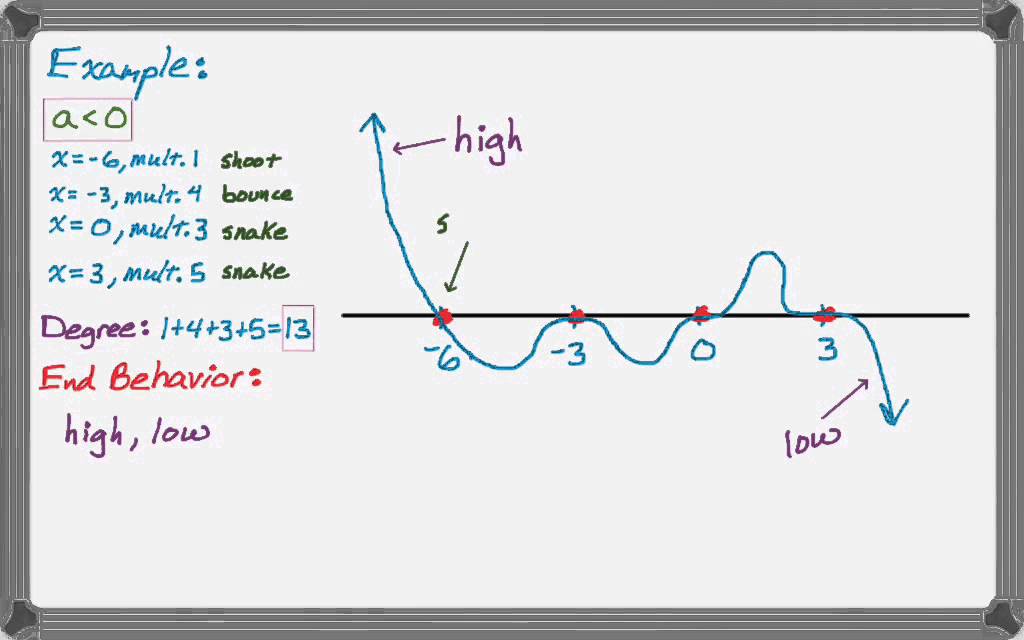
The graph has 2 x -intercepts suggesting a degree of 2 or greater and 3 turning points suggesting a degree of 4 or greater. It then provides a practice to see if students can describe a range of different lines peak plummet etc. We say that a function is increasing on an interval if the function values increase.
When the x -value increase and the y -value increase then the graph of the function goes up. This is followed by a fun activity where in pairs students describe and plot the lines on four graph s. Name these different types of graphcharts.
Use a graph to determine where a function is increasing decreasing or constant. The lead coefficient multiplier on the x2 is a positive number which causes the parabola to open upward. The end behavior of a function describes the behavior of the graph of the function at the ends of the -axis.
Figure 132 illustrates the end behavior of a function f when lim x fx L or lim x fx L In the first case the graph of f eventually comes as close as we like to the line y L as x increases without bound and in the second case it eventually comes as close as we like to the line y L as x decreases without bound. Since the sign on the leading coefficient is negative the graph will be down on both ends. The identifying information must be completed each time that a new behavior management line graph is used.
Describe behavior of the toolkit functions As part of exploring how functions change we can identify intervals over which the function is changing in specific ways. You would describe this as heading toward infinity. Students do the first activity.
In this section you will. Students do second activity. Namely its graph will either be up on both ends or else be down on both ends.
In other words the end behavior of a function describes the trend of the graph if we look to the right end of the -axis as approaches and to the left end of the -axis as approaches. The end behavior of a function f describes the behavior of the graph of the function at the ends of the x-axis. Feedback using the answer sheet or individually.
When it is on the negative axis of x as the x values go from 0 to negative infinity the values of fx go to positive infinity. Label the basic parts on this graph. Up to 10 cash back You can also guess the functions behavior from the table of values.
Lead in 10 minutes i. When the x -value increase and the y -value decrease then the graph of the function goes down. Hand out Language for describing graphs 1 sheet.
I find the vertical asymptotes to be x 4 x. Graph the following function by determining the end behaviors and intercepts from the equation.
Lesson 6 3 Identifying Even Odd Degree Functions Zeros End Behavior Lesson Behavior Polynomial Functions
Polynomials Teaching Mathematics
1 Graphs End Behaviors And Multiplicity Of Roots Of Polynomials Youtube Polynomials Graphing Behavior


Comments
Post a Comment